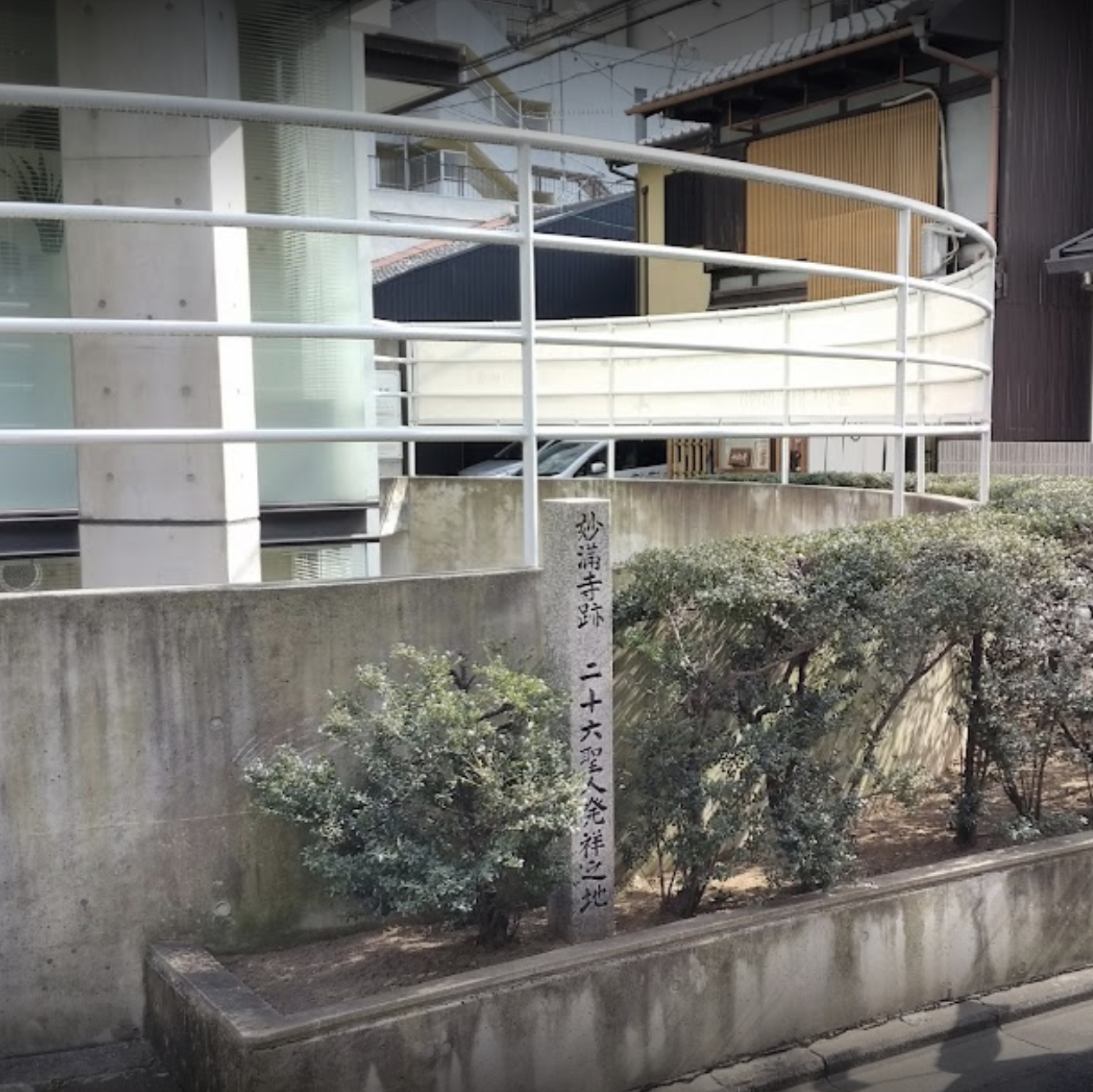
Myomanji ruins
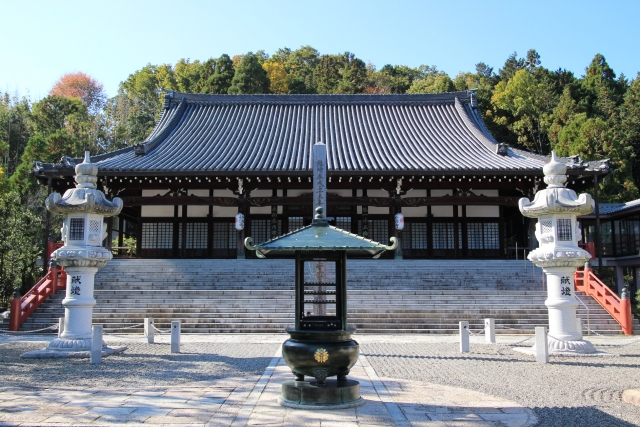
Myomanji Temple, which was founded in 1389, was relocated by Toyotomi Hideyoshi’s order in 1583, so there is no temple here now. It was moved and was located in Nijo, Teramachi for 400 years. It was recently moved again in 1968 to Iwakura in the northern part of Kyoto to get away from the hustle and bustle and avoid environmental deterioration that was increasing due to modernization and urbanization.
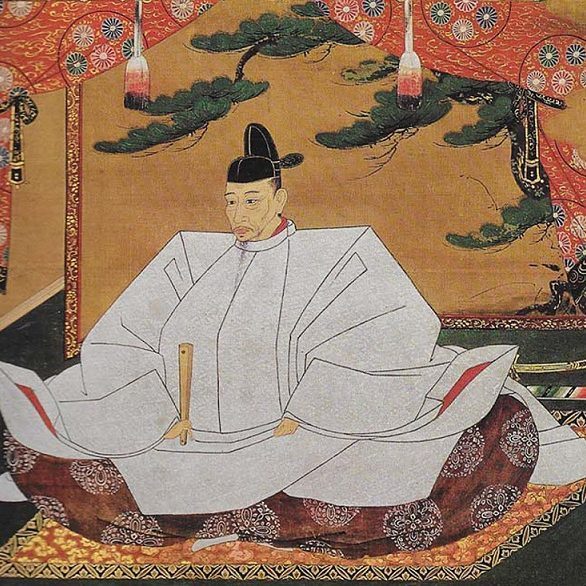
Although this section is about Hideyoshi’s persecution of Christianity, this was not always the case. According to one theory, Hideyoshi was moved to his stance when he visited the Kyushu region of western Japan in 1587, right before the unification of Japan. There, he saw the Portuguese forcibly converting Japanese people into Christianity. He also heard that they were trading Japanese people as slaves. So, he issued an order to expel Batteren in 1587, saying that Japan is a Buddhist country and spread of Christianity is inappropriate in such a country. Missionaries were required to leave the country within 20 days. This order was not a practicable one for many reasons, not the least of which was the fact that his assistant was a Christian. In fact, Hideyoshi often showed a willingness to work with Christianity, even after the expulsion order. For example, he was supportive of missionary work when he granted Franciscan Father Petro Baptista permission to preach freely in 1593. He also allowed construction of St. Mary’s Church, hospitals, schools, and the Spanish embassy.
However, Hideyoshi renewed the prohibitions on Christianity in 1596, and executed the Franciscans that were active in Kyoto. The story goes, the Spanish sailing ship San Felipe washed ashore in 1596. When they were rescued, one of the sailors said, ‘Spain is planning to conquer Japan, and the missionaries are the spearheads,’ triggering the second prohibition order. Using the words of the sailor as proof of his fears, Hideyoshi began his persecution of Christianity in earnest and in 1597, Christian missionaries such as Father Baptista were captured. Hideyoshi gave them the death penalty. Their nose and ears were cut off and they were forced to walk around the city of Kyoto. Then, they were taken to Nagasaki, which had a large Christian population, to be crucified. Mitsunari Ishida, the shogunate administrator at the time, who had some sympathy for the Christians, slightly changed the order out of mercy so that only one ear was cut off. However, in order to humiliate the captives according to the customs of the time, the 24 missionaries were laid down in cow carts around the city. After that, they were transported from Kyoto to Nagasaki on foot. Two believers joined them along the way, bringing the total to 26. Upon arrival in Nagasaki, they were all burned at the stake and executed. Most of the 26 martyrs were active in churches and other facilities near Myomanji Temple.
The ears of Father Baptista and his colleagues were cut off about 3.5 kilometers north of Myomanji Temple site, where another Christian community had formed. The ruins of the Keicho Catholic Church can also be found here. After 1587, Hideyoshi issued the persecution of Christians and suppressed Christianity in earnest. But after Hideyoshi’s death, missionaries obtained permission for missionary work and rebuilt the temple in the era of Ieyasu.. The result of that effort is Keicho Catholic Church. After the Battle of Sekigahara in 1600, Ieyasu Tokugawa came to power, but Ieyasu also initially showed a generous attitude toward Christians. The Keicho Catholic Church, built in 1604, is said to have been a beautiful Western-style building, with missionaries stationed there and a majestic mass held every day. However, the Tokugawa administration, which was initially generous to Christians, banned its teaching in 1612 out of the fear that Christian countries would come to invade Japan. The Keicho Catholic Church was destroyed in less than 10 years. Sadly, it was a building that symbolized the history of Christians who were at the mercy of those in power at the time.