01. Sengoku San Ei Ketsu
It is impossible to talk about Kyoto without first mentioning Nobunaga Oda, Hideyoshi Toyotomi, and Ieyasu Tokugawa, also known as the Three Heroes of the Sengoku Era (Sengoku San Eiketsu). Each left their marks on Japanese history and are popular figures even today. They are all from the Owari Province, in what is now Aichi Prefecture. Nobunaga Oda is known for creating the Azuchi culture. While full of Western sensibilities gentile manners, he also showed an aggressive side from time to time. Hideyoshi Toyotomi’s accomplishments include the construction of Osaka Castle, a castle unrivaled in all the world. Around it, he founded the Momoyama Culture, and worked tirelessly on urban development in Kyoto through large-scale civil engineering work. Ieyasu Tokugawa brought 250 years of peace to Japan and created the stable and prosperous Edo period. Although their personalities were quite different, they all aimed to unify the country with their strong personalities. In fact, they are relatives. Not blood relatives, but through political marriage and adoption. For example, Nobunaga’s eldest daughter and Ieyasu’s eldest son were both married at the age of nine, and the Oda and Tokugawa families became one.
It is no exaggeration to say that from the end of the 16th century to the 17th century, the history of Japan is a history of war. While foreign invaders were rare, domestic conflicts created a constant state of war that lasted centuries, with many decisive battles that are talked about to this day. Under such turmoil, the Muromachi Shogunate, who controlled Kyoto at that time, lost its governing power. Daimyo from all over the country, who had been divided into groups, entered Kyoto and used the authority of the imperial court to expand their power and try to make their name known throughout the country. This started the Gekokujo Period, when social status became meaningless, and the armed were able to claw up the social ranks by use of force.
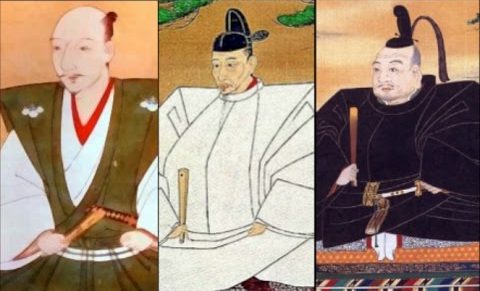
From left to right: Nobunaga, Hideyoshi, Ieyasu
The Battle of the Heroes for the Unification of the Kingdom (English)
Nobunaga Oda
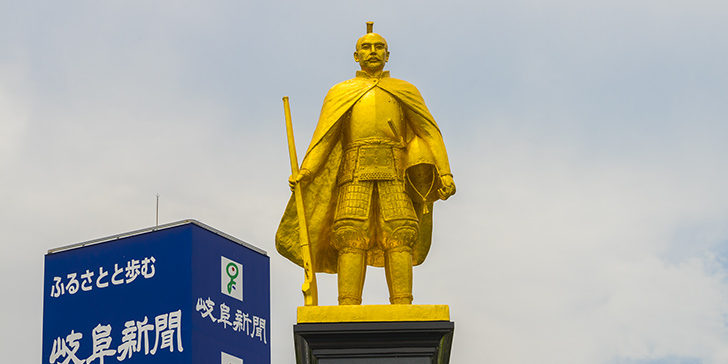
Nobunaga’s Breakthrough
During this time, around 1559, Nobunaga was busy unifying the Owari region, which is now Aichi prefecture. He defeated the Imagawa clan in 1560 and the Saito clan in the Hokuriku region in 1567, and ruled the eastern part of Kyoto. Nobunaga was aiming for further expansion, but he was also banished from Kyoto. He and Yoshiaki joined forces and Nobunaga used this as an opportunity to advance into Kyoto. In 1568, Nobunaga overwhelmed the forces that were opposing Yoshiaki and entered Kyoto with 60,000 elite fighters. They expelled Yoshihide, the 14th shogun, who was the head of the puppet government at that time, from Kyoto, and Yoshiaki was placed in the position of the 15th shogun.
Nobunaga succeeded in entering Kyoto, but he did not particularly care about the relationship with Yoshiaki’s Muromachi Shogunate. To him, his relationship to the Emperor through the Muromachi Shogunate was more important. Unlike the current emperor, the emperor at that time had tremendous authority. Nobunaga’s aim was to expand his power by building a close relationship with the emperor and under the guise of “defeating the rebels” start wars and accumulate power with the backing of the emperor. Nobunaga expanded his power by conquering rebels, but opposing forces coming in a series of three sieges, were used to defeat him.
In the first siege, not only various Daimyos such as Miyoshi, Rokkaku, and Asakura, but also famous religious forces such as Honganji and Enryakuji joined forces to oppose Nobunaga. This was a great battle, but Nobunaga was able to take control of Ise in Mie Prefecture and Sakai in Osaka around 1570 and preserve his reign.
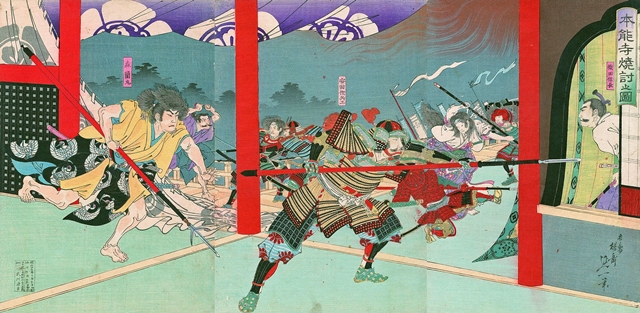
Nobunaga’s death and the unified world
The second siege against Nobunaga began with Yoshiaki’s actions. Yoshiaki, who became the 15th shogun with the support of Nobunaga, was also the face of Nobunaga’s puppet government. Yoshiaki grew dissatisfied that all of the actual power was in Nobunaga’s hands. To Yoshiaki, Nobunaga’s existence greatly limited his authority and was an obstacle to achieved the world he envisioned when becoming shogun. This put great strain on their relationship, which deteriorated severely.
In 1571, Yoshiaki secretly revealed his distaste for Nobunaga’s rule and called on assistance from the Daimyos and surrounding forces. In this way, traditional Daimyos such as Asai, Asakura, Miyoshi, and religious forces such as Honganji, and Shingen Takeda from the east, joined together to create a second network that was stronger than the first to overthrow Nobunaga. Although Nobunaga suffered some defeats at the hands of Shingen Takeda, he attacked him decisively by burning down Enryakuji Temple on Mount Hieizan. Yoshiaki raised his troops in 1573 and warred with Nobunaga, but Nobunaga was victorious in the end. Nobunaga expelled Yoshiaki, the 15th shogun of the Muromachi Shogunate, from Kyoto, and the Muromachi Shogunate, which had lasted for about 240 years, was no more.
The exiled Yoshiaki was a determined man and was unable to give up on the reconstruction of the Shogunate and stubbornly pursued revenge on Nobunaga. He planned a new network of forces to attack Nobunaga centered on the Mori Clan in western Japan. Then, in addition to the forces so far, influential Daimyos such as Mori and Uesugi were added, and the pirates of the Seto Inland Sea were also invited to participate. They joined forces with little pretense except for their hunger for more power. This was the Third Nobunaga Siege Network. Again, Nobunaga proved to be a fierce warrior. In 1580 he destroyed the oppositions stronghold, Ishiyama Hongan-ji Temple in Osaka. The quelling of the third siege against Nobunaga was now just a matter of time. However, as the unification of Japan drew near, Nobunaga, fearing rebellion of his vassal Mitsuhide Akechi, committed suicide at the Honnoji Temple in Kyoto in 1582.
The thorough Rationalist
In many ways, Nobunaga was a true genius. At the same time, he also had a level of stubborn rationality and cruelty that were difficult for ordinary people to understand.
Nobunaga was a thorough rationalist. He was not without faith in the gods and Buddha, but it seems he was skeptical of the afterworld and spirits that cannot be explained by rational arguments. In fact, tombstones and stone Buddha statues were crushed and used as construction materials for the stone steps and walls of Azuchi Castle and Nijo Castle, where he was involved in the construction. Considering the belief people had in religion and the role it played in their lives, these actions were quite shocking for the time.
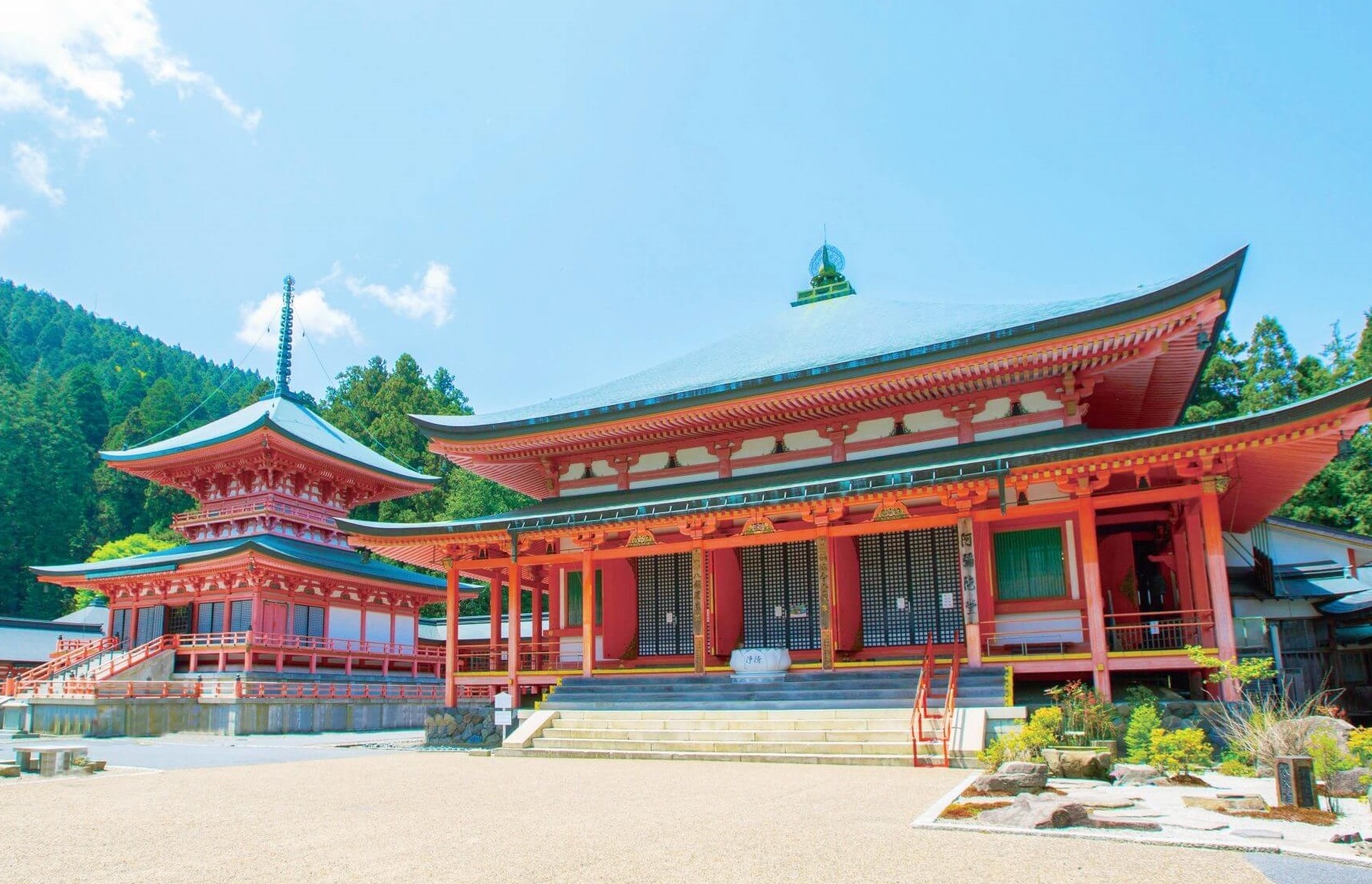
In addition, Nobunaga did not forgive anyone against whom he had a grudge. Even religious organizations, such as temples, were not exempt. In 571, he completely burned down the Enryakuji Temple on Mt. Hiei for supporting one of the sieges against him. At that time, Nobunaga took a stance of thoroughly suppressing Buddhism, being wary of the fact that Buddhist temples were a threat because they had money, power, and influence. All of the temple buildings of Enryakuji Temple on Mt. Hiei were set alight. Reporting suggests that not only monks but many innocent believers were murdered. According to a letter from missionary Frois, the death toll was recorded at about 3,000.
Welcoming foreign cultures
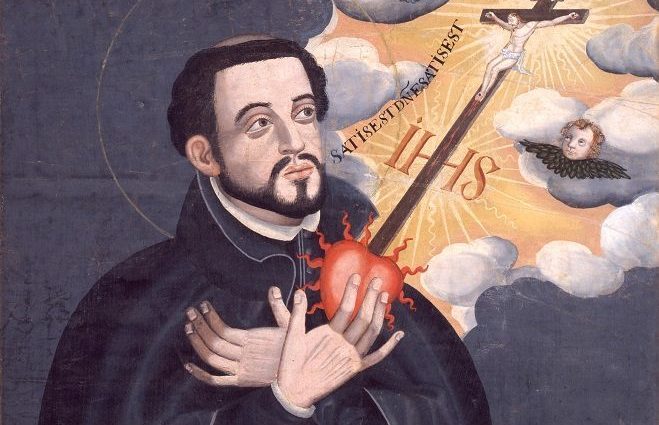
One way in which western influences revolutionized Japanese history was through the introduction of guns in 1543, and Christianity in 1549. At that time, the world was going through the Age of Discovery. Spain and Portugal were especially active in embarking on new colonization. As a part of this trend, it was the Portuguese Jesuit missionaries that brought Christianity to Japan. The history of Kyoto and Christianity begins with Francis Xavier, who landed in Satsuma on the southern tip of Japan in 1549. After Xavier, many others followed to carry out missionary activities, and with the protection of Nobunaga, Christianity gradually took root in Japan.
Nobunaga burned down Mt. Hiei and suppressed all Buddhists, and also intended to suppress the Buddhist forces. On the other hand, he was more generous to missionaries such as Organtino, and was generally more accepting of Christianity. With the protection of Nobunaga, new churches and chapels will be built, and the Christian missionary work in Kyoto will reach its peak. There is another reason why Nobunaga protected Christianity. The Portuguese missionaries, including Xavier, also acted much like diplomats and trading companies, and were intellectual elites. And in order for Portugal to trade with Japan, they had to negotiate for permission through its missionaries. Therefore, by deepening his relationship with Christianity, Nobunaga was able to take advantage of trade with Portugal and acquire weapons. Nobunaga gained economic benefits by selling raw yarn imported from overseas domestically, and was also able to obtain military supplies such as saltpeter (the raw material for gunpowder), and lead (the bullets).
By 1582, Nobunaga would take control of most parts of Honshu. This was made possible by his flexible acceptance of incoming foreign cultures.
Hideyoshi Toyotomi
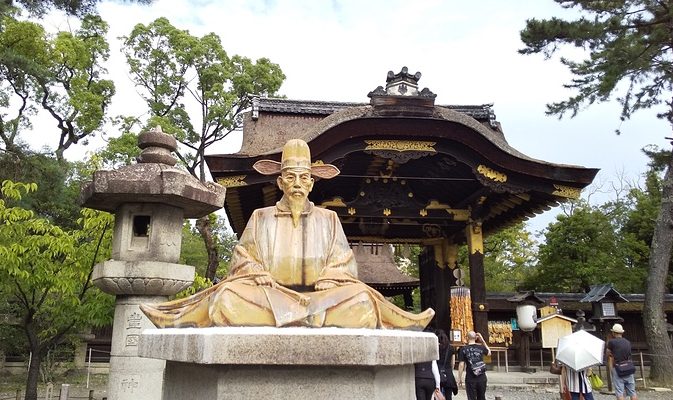
Hideyoshi Toyotomi’s unification and death from illness
Hideyoshi Toyotomi was originally a peasant and was promoted to serve Nobunaga Oda as a sandal-bearer. Sandal-bearers were responsible for carrying around the noble’s shoes and putting them under his feet when he went outdoors. Hideyoshi became Nobunaga’s vassal at the age of 17, but he was recognized for his talent in whatever he did and was quickly promoted up the ranks.
Hideyoshi was battling under Nobunaga’s orders. He was fighting the Mori army in the Chugoku region 200 kilometers west of Kyoto when his lord, Nobunaga, committed suicide at Honnoji Temple. After hearing about his lord’s suicide, Hideyoshi learned that Mitsuhide Akechi was responsible, and made a bold move to return to Kyoto to defeat Mitsuhide, making the arduous trip in just 10 days. After returning to Kyoto, Hideyoshi defeated Mitsuhide and joined the Oda clan, who had just lost Nobunaga. In 1583, Hideyoshi defeated his rival, Katsuie Shibata, and decided to effectively succeed Nobunaga. Hideyoshi took control of all of western Japan in 1586 and was at the height of his power. He built the gorgeous Jurakudai, with its gold leaf, in Kyoto in 1587 as a workplace and residence. And surrounding this, he built a vast castle town. In addition, Hideyoshi held a large tea ceremony with citizens at Kitano Tenmangu in the same year in order to promote his authority. This was a rare event at that time, drinking tea and interacting with people from all classes. Then, in 1590, he defeated Hojo in the decisive battle in Odawara in the current western part of Kanagawa prefecture, and finally achieved national unification.
Hideyoshi achieved national unification, but he fell ill in 1598. His son Hideyori, who was the successor to Hideyoshi, was only six years old, so he immediately appointed five influential daimyo, Ieyasu Tokugawa, Toshiie Maeda, Hideie Ukita, Terumoto Mori, and Takakage Kobayakawa, as regents. The five vowed to keep the nation unified until Hideyori was old enough to rule by himself. And in the same year, Hideyoshi died of illness at the age of 62.
The destruction of the Toyotomi family
The five vowed unity. But Ieyasu Tokugawa broke the agreement and gradually accumulated and expanded his power. Details will be explained in the section dedicated to Ieyasu Tokugawa, but Ieyasu caused a political dispute within the administration. In 1600, he was in Gifu prefecture, betting on the position of power with Mitsunari Ishida, who had a strong connection with Hideyoshi. A decisive battle was fought in Sekigahara.
In the end, Ieyasu’s victory will make him a force that surpasses the Toyotomi family. Three years later, Ieyasu gained the position of Shogun and opened the shogunate in Edo, including what is now Tokyo. Ieyasu defeated Mitsunari Ishida in the Battle of Sekigahara, and although the Toyotomi clan, who succeeded Hideyoshi, lost their power, they still retained much of their influence. Ieyasu was eyeing a chance to destroy the Toyotomi clan. In 1614, when the Toyotomi clan rebuilt the temple that had past connections to Hideyoshi, Ieyasu started a war called “Winter Campaign of the Siege of Osaka” using illogical and disingenuous reasons.
Hideyori, the successor to Hideyoshi, holed up in Osaka Castle, but was unable to take advantage of the strategic position of being in a well-fortified castle and make progress in the face of Ieyasu’s overwhelming forces. Hideyori was somehow able to survive the Winter Campaign and bring peace back to the region. However, one condition for peace was the filling of the moat surrounding Osaka Castle. Ieyasu soon followed is Winter Campaign with the “Summer Campaign of the Siege of Osaka. Hideyori returned to defend Osaka Castle, but without the moat, Ieyasu’s attack could not be prevented. Osaka Castle burned. When Hideyori realized this, he committed suicide, ending the Toyotomi line.
Side Note:
Hideyoshi, seeing the possibility of national unification within his lifetime, started construction of Osaka Castle in 1583. It took 15 years to complete the giant, impregnable castle. The castle was completed in 1598, when Hideyoshi died, but it was destroyed by Ieyasu after the Toyotomi clan was destroyed in the Winter and Summer Campaigns of Osaka.
Many Japanese people think of Hideyoshi when it comes to Osaka Castle. In reality, the current Osaka Castle was built by Hidetada, one of Ieyasu’s sons. The originality embedded in the Toyotomi castle has been completely destroyed. Remains of the original Osaka Castle built by Hideyoshi are actually buried in the ground inside the current site of Osaka Castle.
Ieyasu made a false accusation and started a war called “Osaka Winter Battle” in 1614. Toyotomi Hideyori, the successor of Hideyoshi, was locked up in Osaka Castle. He managed to outlast Ieyasu’s attack and win the peace, but he was forced to filling up the moat of Osaka Castle. In the following year’s war, “Osaka Summer Battle”, Hideyori once again took up residence in Osaka Castle, but this time he was unable to repel Ieyasu’s attack because there was no moat around the castle. Osaka Castle went up in flames and Hideyori killed himself, resulting in the end of the Toyotomi family line.
Hideyoshi’s Urban Planning
The unification project started by Nobunaga Oda was handed down to Hideyoshi Toyotomi.
With the backing of the authority granted by the emperor of Kyoto, Hideyoshi proceeded to unity the nation. He built Osaka Castle. But not just that. He developed Kyoto in a major way through major urban development projects, including building a port at the mouth of the Yodogawa River to revitalize logistics with Osaka.
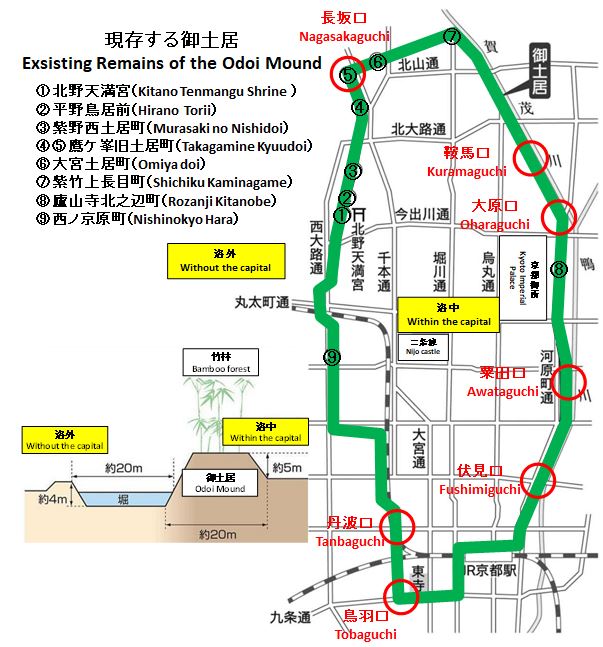
As another part of Kyoto’s urban development under Hideyoshi, an earthwork called Odoi was created to act as a barrier against enemy invasion and a dike to prevent flooding of the Kamo River. Completed in 1591 with a high budget and labor costs, the Odoi consists of a trapezoidal mound and a moat, with extends for 22.5 kilometers. The inside was called Rakuchu, and the outside was called Rakugai. Seven entrances were built to go between the two. Place names such as Kuramaguchi and Tambaguchi exist today as remnants of these ancient entryways. After 1603, in the Edo period, as the peaceful unification of the country continued, the Odoi became unnecessary as a protective measure. As the city continued to expand from the Rakuchu, the Odoi was destroyed section by section, and only a few remnants of the northern part of the Odoi remains today.
Hideoyoshi also created Teramachi Dori. Kyoto moved to Heiankyo (Ancient Kyoto) in 794, and Teramachi Dori were the streets located on the eastern most side of the city. Kyoto was often hit by war, but the damage from the Onin-Bunmei War of the late 15th century was particularly brutal. The damage was so severe that the orderliness of most of the streets had been lost. After the war, a small settlement as formed in the area, but reconstruction struggled to take hold. Kyoto was the smallest in its history during this time.
To revive the devastated town, in 1590, Hideyoshi gathered temples from all over Kyoto and relocated in the modern-day Teramachi Dori area and built a large temple district. Approximately 80 temples and towers lined up cleanly across many wards. It is said that Hideyoshi located the temples on the eastern part of Kyoto not only for reconstruction but as a barrier against invasions from the east.
Hideyoshi’s Wisdom and Persecution of Christianity
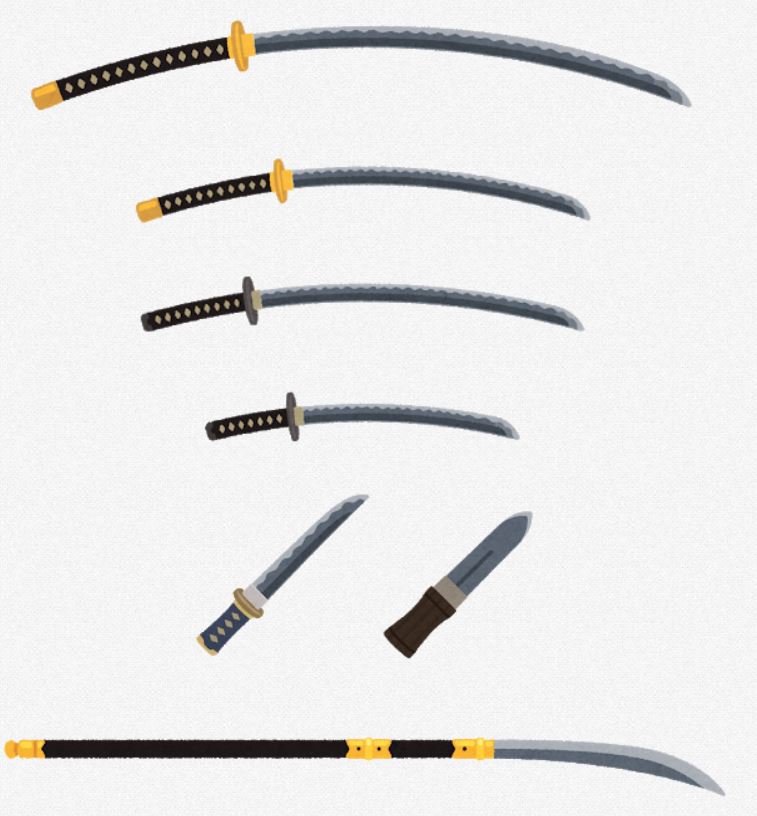
Hideyoshi was not only a talented architect, he was also a genius politician. One of his many exploits was a program called “sword collection” conducted in 1588. Under the guise of collecting metal for the construction of the Great Buddha at the Hokokuji Temple in Kyoto, he collected words and spears from peasants and farmers. He knew that peasants and farmers were devout followers of Buddhism and would not be able to resist a call to such a holy cause. In fact, it was just a guise to disarm the populace to prevent armed uprisings that were so common during the Sengoku period.
As mentioned, Nobunaga, being the master diplomat and eager to effectively use foreign powers to his advantage, was tolerant and even friendly toward Christianity. Hideyoshi, however, would develop a different view. In the beginning, Hideyoshi was as tolerant of Christianity as his master was. But Hideyoshi was very surprised to learn that when Kyushu in western Japan was conquered, it had become a Jesuit territory. Japanese believers of Christ are called Christians, but Christian daimyo Sumitada Omura had given Nagasaki to the Jesuits. In addition, Hideyoshi learned that Christian daimyos and Christian missionaries in Kyushu were involved in the slave trade of Japanese people. This, on top of the other transgressions led Hideyoshi to abandon friendly ties and the Christian protection policy. Although many Christians in Kyoto were prospering under the protections afforded them under Nobunaga, missionary influence decreased after Hideyoshi expelled Batteren in 1587. Christianity enters an era of persecution at this point. It is said that Hideyoshi’s persecution of Christianity stemmed from his concerns about the invasions of Japan by Spain and Portugal, and his concern that religion would become more powerful than the shogunate.
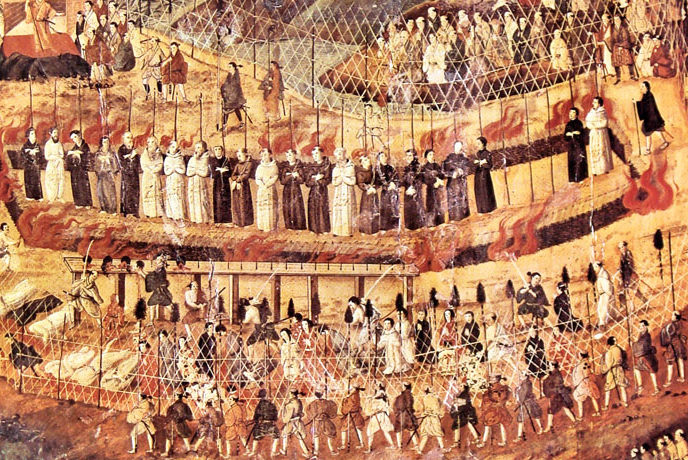
In 1597, saying that active religious activities are violate persecution of Christianity in Japan, Hideyoshi arrested many believers and missionaries. Twenty-six Catholics were sent to Nagasaki to be executed.
Ieyasu Tokugawa
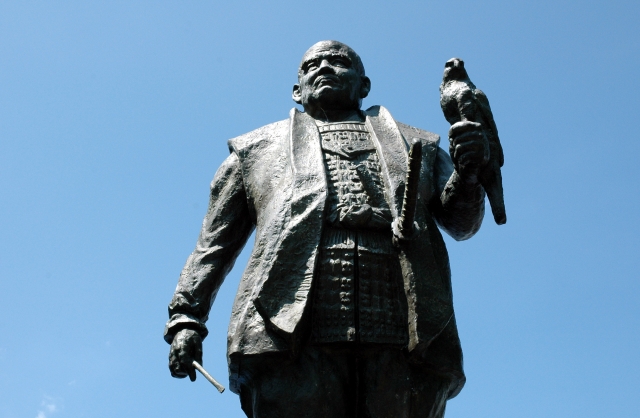
The unification of the world
Ieyasu was in what is now Sakai, Osaka, when Nobunaga committed suicide due to the betrayal of Mitsuhide Akechi in the Honnoji Incident. Ieyasu was an ally of Nobunaga. Upon hearing of Nobunaga’s suicide and Mitsuhide’s betrayal, he along with a few of his vassals, headed for Mikawa in present-day Aichi Prefecture to put Mitsuhide down. But by this time, Hideyoshi had already defeated Mitsuhide. Hideyoshi had moved quickly to take control after Nobunaga’s death, before Ieyasu had the chance. Hideyoshi established the Toyotomi government in 1585 and urged Ieyasu to serve him in Kyoto. Ieyasu refused at first. However, one Daimyo after another moved to Hideyoshi’s side. Hideyoshi even sent his own mother and sister as hostages to Ieyasu to soften him up. Ieyasu finally relented and joined Hideyoshi to serve him in Osaka Castle in 1586.
Today, Tokyo is known as the “Tokyo of the world” but the development of the area progressed only when Ieyasu was given the land by Hideyoshi as a reward for his contribution to his war efforts. Ieyasu, now a subordinate of Hideyoshi, played a significant role in conquering the Hojo Clan of Odawara Castle in 1590. Hojo, who had stood defiant against Hideyoshi, was defeated, and Ieyasu was given control of the vast Kanto Plains, which includes what is now Tokyo. Ieyasu would later lay the foundations of prosperity that would continue to be the center of Japan for over 400 years. However, when Ieyasu first entered Kanto, it was nothing more than a vast wasteland of swamps. Ieyasu spread his vassals across the entire area of his new land. And while he was given control of the largest territory of the Toyotomi government, he himself would not participate in the Imjin War. Instead, he spent his time and resources steadily building up his might for the future.
The death of his lord Hideyoshi caused Ieyasu seized power and attempt the unification of the nation. Immediately before his death in 1598, sensing death was near, Hideyoshi appointed five warlords to support his successor, Hideyori. Ieyasu was one of the leading Daimyo among them. After Hideyoshi’s death, Ieyasu emerges within the administration and seizes power. Hideyoshi’s close aid, Mitsunari Ishida, was very bitter about Ieyasu’s move. Soon, the two will be driven to conflict.
Sensing that Uesugi Clan of Aizu in what is now Fukushima Prefecture was strengthening its armament for an attempt at power, Ieyasu sent troops to subdue them in 1600. Seeing this deployment, Mitsunari Ishida called on various Daimyo to rally to defeat Ieyasu. Is this way, the Daimyo of Japan were divided into the Ieyasu group (Eastern army) and the Mitsunari group (Western army) in 1600, and fought the great battle of Sekigahara, on which power for the future rested. In turned out, there were many traitors on the Western side, and Ieyasu easily won in about six hours. After his victory, Ieyasu moved the national capital from Kyoto to Edo, which he had been developing as his homebase, and launched the Edo Shogunate in 1603.
Even as Ieyasu launched his Shogunate in Edo, Hideyoshi’s son was still alive and well in Osaka. The Imperial Court and other officials continued to recognize the Toyotomi Clan as the official representatives of the samurai class. Ieyasu felt certain that peace would not come to the Edo Shogunate until the Toyotomi Clan was destroyed. As mentioned earlier, Ieyasu waged two wars, and destroyed Hideyoshi’s clan and succeeded in national unification, in both name and reality.
Kyoto after government transferred to Edo
Even after the center of politics moved to Edo, Kyoto did not decline significantly. This was because the imperial throne was will located there. In addition, infrastructure such as roads were developed, allowing people to travel to Kyoto easily, which increased tourism to the area. With the arrival of peace and development of transportation infrastructure, the culture of the citizens of Kyoto flourished. Ieyasu has left many marks on Kyoto, including many buildings that are still there today. He built Nijo Castle, assisted in the construction of Higashi Honganji Temple, and contributed to the expansion of the temple area of Chion-in Temple. In 1603, Ieyasu performed a ceremony at Nijo Castle in which he was appointed as the Shogun, the highest authority of samurai. Nijo Castle was originally built to lodge the Shogun when they came to Kyoto, but it was rarely used. Since it was last visited by the third Shogun Iemitsu Tokugawa, it was not used for more than 200 years. This was because Ieyasu himself rarely needed to travel to Kyoto himself when he had business with the Imperial Court since he had the power to call the messenger of the Imperial Court to Edo.
Ieyasu initially took a friendly stance regarding Christianity. Tenshodo, which is reported to have been in Kamigyo Ward, was a beautiful Western-style building where missionaries were housed and that held peaceful mass every day. However, Ieyasu became wary of invasions by Catholics of other countries around the world. He banned the teaching of Christianity in 1612. Tenshojo was destroyed, having existed for less than 10 years. The fate of Christians was now in the hands of whomever had power at the time, and the persecution of Christianity only got worse over time.
In the history of martyrdom in Japan, there are three significant events known as the Great Martyrdom of Japan: the Great Martyrdom of Nagasaki in September 10th, 1622, the Great Martyrdom of Edo in December 4th, 1623, and the Great Martyrdom of Kyoto, described below.
On October 6th, 1619, over 50 Christians were gathered along Rokujo River, including 11 children, some of whom were under 2 years old. Among the many families executed that day, the fate of Tecara and his family especially brought tears to people’s eyes. Tecara had five children. With a 3-year-old in his left arm, his right arm around his 12-year-old, and 2 other children crucified on separate crosses, the execution started. As the fire was lit and logs started to burn, Tecara continued to comfort the children, telling them they will be delivered to God soon, through the flames and smoke to his last breath. A memorial stone was placed on the bank of the Rokujo River as a memorial to the execution.