History of Kyoto
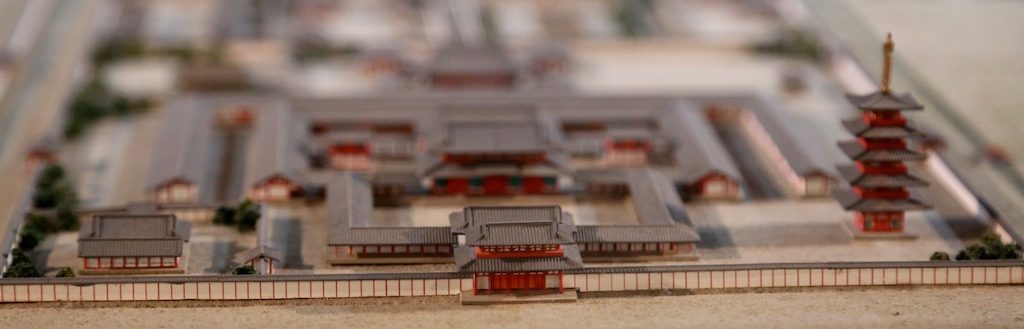
In 794, Emperor Kanmu relocated the capital of Japan from Nagaokakyo to Heiankyo, which is now Kyoto. Kyoto remained the capital of Japan for over 1000 years. Although the political center moved several times in this period, Kyoto continued to be the capital of Japan. Cities that remain the center of civilization for such a long time are rare around the world.
1. Heian Period (794 – 1192)
●Japanese unique cultures were born
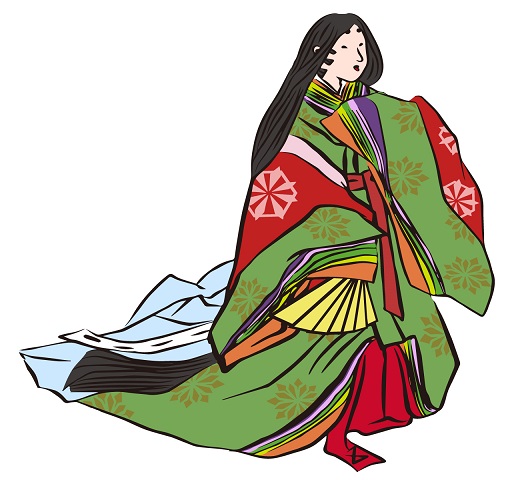
In the former half of the Heian Period, Japanese unique cultures were born based on this almost unprecedented peace. Before the Heian Period, the imperial court was based on Chinese systems. But because of the peace and stability experienced during the Heian Period, styles and systems unique to Japan were developed. Countless literary masterpieces were born during this period, from Shikibu Murasaki’s ‘Tales of Genji’ to Sei Shonagon’s ‘The Pillow Book’.
●Appearance of SAMURAI
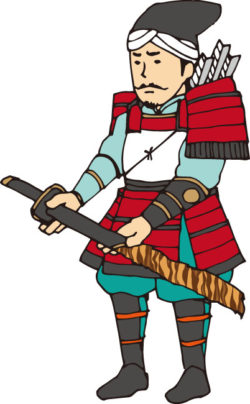
In the latter half of the Heian Period, in addition to the aristocrats that were the center of life and culture, a new class of people, the samurai, gained prominence in society. The raise of the samurai can be attributed a change in land ownership systems. In the 7th century, the imperial court owned all of the land. But many peasants escaped the heavy taxes by not claiming their land and revenues became stagnant. So, the court introduced a new system. If people worked the land enough, it became theirs. In the late Heian, influential temples and aristocrats had the privilege of not paying taxes on land. Peasants began to donate land to them in exchange for lowered tax rates on their land. In this way, land began to accumulate in temples and powerful families. This led to more and more land boundary conflicts. The need to protect one’s land holdings became a pressing issue. The landowning temples and aristocrats began to sign contracts with peasants to protect their land. The peasant began to arm themselves for this task, and new class of samurai was born. In Japan, from the ancient times to the early Middle Ages (the Kamakura Period), the political system centered on an emperor was kept, and the Imperial court often means the government in which an emperor carried out politics. After the appearance of samurai, they gained popularity and grew to seize political power in Japan, leading to conflict with emperors for a long time.
2. Kamakura Period to Muromachi Period (1192 – 1573)
●Samurai achieved political power
The confrontation between Genji and Taira in the ‘Genpei’ war is well known, Genji and Taira are both samurai. But, the samurai do not enter an era of administrative control until the Kamakura Period. Yoritomo Minamoto defeated the Taira clan and established a government in Kamakura City, in what is now Kanagawa Prefecture next to Tokyo. However, the imperial court in Kyoto was still strong, and Kyoto remained Japan’s largest and most important city. Archaeological excavations around Kyoto Station have found remains of metal workshops, various types of stores with a wide range of merchandise, and many coins thought to have been left by wealthy financial firms, leading to the theory that Kyoto was an economic and financial center. Kyoto was continuing to grow as the economic center of Japan.
●Kyoto regained the position of Japan’s political center
In the end period of Kamakura Shogunate, Mongol invasion attempts against Japan occurred in 1274 and 1281. Despite that Japan fought off foreign invasions, these war financially weakened Kamakura Shogunate. Having seen the circumstances, Emperor Godaigo tried to defeat Kamakura Shogunate in order to restructure a political system centering on the Emperor and regain political power. The attempt was successful because Takauji Ashikaga, who was samurai and belonged to Kamakura Shogunate, betrayed it and helped the Emperor Godaigo. As a result, Kyoto regained its position as Japan’s only political center. However, Godaigo did not provide samurai including Takauji Ashikaga with sufficient reward and imposed heavy tax on citizens to build new imperial court. This behavior became the trigger of the war and Takauji and other samurai defeated Godaigo. They established a new samurai government in Kyoto called the Muromachi Shogunate in 1338.
With the 3rd Shogun Yoshimitsu Ashikaga stimulating the Kitayama Culture and the 8th Shogun Yoshimasa giving life to the Higashiyama Culture, purely Japanese cultures began to flourish in Kyoto. ‘Kinkakuji temple’ and ‘Ginkakuji temple’ are now popular temples and major tourist attractions, but at that time they were the estate of Yoshimitsu Ashikaga and the villa of Yoshimasa Ashikaga, respectively.
However, the administration’s glory could not last forever. A fight over who will succeed the Yoshimasa administration broke out and started the Onin War in 1467. The city of Kyoto itself became the battlefield. The war continued for 11 years, and many of its buildings were destroyed. However, Kyoto underwent a splendid reconstruction when the war ended. At its center were ordinary citizens, who had been gradually gaining strength in society.
3.Azuchi Momoyama – Edo Period (1567 – 1868)
●The Sengoku Period and three heros
The end of the Onin War saw the weakening of the Muromachi Shogunate and the ushering in of the Sengoku Period (Warring States Period). The Sengoku Period is a period of almost constant civil war from the 15th century until the end of the 16th century. Nobunaga Oda, Hideyoshi Toyotomi, and Ieyasu Tokugawa, also known as the Sengoku Sanei Ketsu (The Three Heors of the Sengoku Era), came to power during this time. Nobunaga Oda entered Kyoto with the aim of unifying Japan under one leadership. He strengthened is relationship with the emperor and under the pretext of ‘defeating rebels’ gained the emperors support to wage war and expand his power. However, moments before this dream of a unified Japan was realized, he was betrayed by his deputy, Mitsuhide Akechi, and committed suicide in 1582 at Honnoji Temple.
Nobunaga’s unification project was continued by Hideyoshi Toyotomi. Hideyoshi worked quickly. With powers given to him by the emperor, he succeeded in unifying the nation 1590. Hideyoshi went on to build Osaka Castle and undertook major infrastructure development projects. He also built Fushimi Castle in the southern outskirts of Kyoto, where he would base himself in his later years. Kyoto also benefitted from Hideyoshi’s urban development projects. He established a port on the Yodogawa River, and revitalized logistics with Osaka. This powerful urban structure exists even today.
Hideyoshi died in 1598. After an internal struggle and the battle of Sekigahara in 1600, Ieyasu Tokugawa took power and established a new government in Edo (what is now Tokyo) and transferred all political functions there. However, Kyoto remained the cultural and industrial center of Japan. High-class products such as Nishijin fabric continued to be produced in Kyoto, and shipped across the country. Kyoto’s culture and industry, Edo’s political influence, and Osaka’s commercial activities. The three cities were called ‘San-To’ or the ‘Three Cities’ and continued to prosper. It is thought that Edo had a population of 1 million, Osaka had 500,000, and Kyoto 400,000 people.
4. Edo Period (until 1868)
●The crisis of Edo shogunate
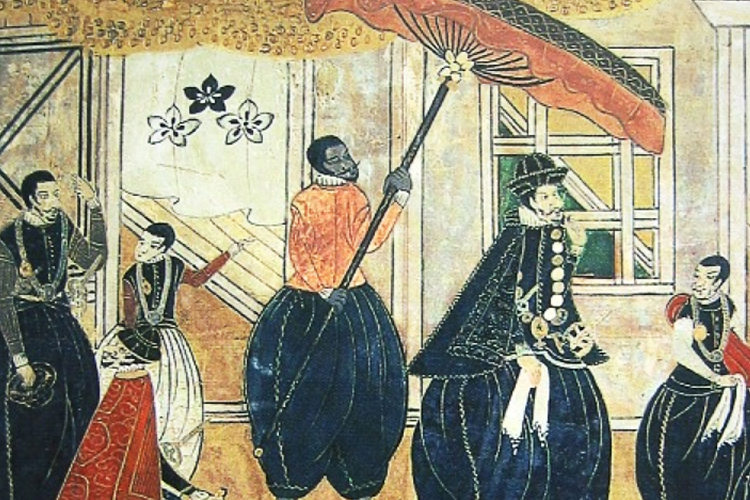
The Edo Period started by Ieyasu Tokugawa experienced peace and tranquility for 300 years. During this time, the Shogunate had a national isolation policy, keeping trade with foreign countries to a minimum. In 1853, American Commodore Matthew Perry landed his ships in Uraga and demanded the Edo Shogunate open up the country to foreign trade. The U.S. wanted to use Japan’s ports as a supply base for fuel and other goods for trading with Asian countries. Succumbing to US pressure, the Edo Shogunate signed the Japan US Treaty of Amity and Commerce in 1858 to start trade with foreign countries.
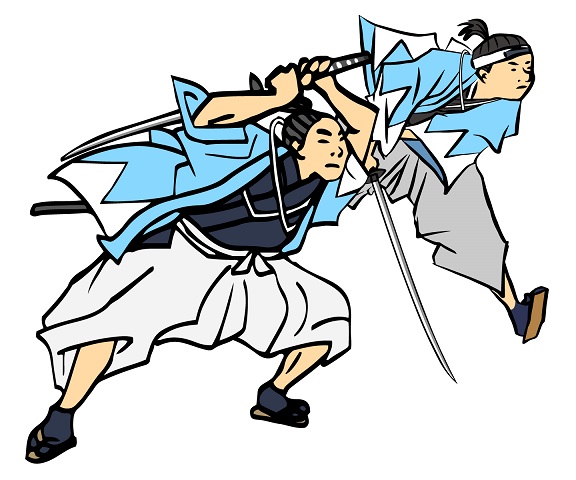
Domestically, many influential people all over Japan saw the Edo Shogunate succumb to foreign powers and saw this as a weakness. Many started to think that the Shogunate could not or should not be taken seriously and wanted to oust the foreigners and return political power to the emperor in Kyoto. This faction of thinking was called Sonno Joi, meaning ‘Revere the Emperor, expel the barbarians.’ From around 1863, the Sonno Joi faction started attacking and assassinating around Kyoto. Kyoto became an unstable and dangerous place quickly. In these circumstances, the Shinsengumi was born in order to bring security back to Kyoto.
The Sonno Joi movement gained popularity not only in Kyoto and Edo, but throughout the country. In the midst of this trend, a war broke out between the Satsuma government and Britain in 1863. The Satsuma were easily defeated by the overwhelming British army and their advanced weapons. Having experienced battle with foreigners, the Satsuma powers realized that it is futile to eliminate foreigners from Japan by brute will and strength. It was necessary to grow stronger by learning from them. So, the Satsuma powers, along with Choshu, tried to defeat the Edo Shogunate in order to establish a new government in Kyoto.
In 1867, Edo shogunate gave back its political power from Edo to Kyoto without war with the Satsuma and Choshu. In order to avoid a direct confrontation with the Satsuma and Choshu clans, which were aiming to overthrow the Shogunate, the government was returned the power to the Imperial Court. Behind the scenes, there was a belief that the Imperial Court did not have the ability to run the government and that the Tokugawa clan would be able to take control even under the new system. However, due to a conspiracy by Choshu and Satsuma, the Tokugawa clan was excluded from the new government organization.
Tokugawa clan was not able to endure the ruthless treatment and fought a war against Satsuma and Choshu for power. The Shinsengumi helped Tokugawa clan and fought against the new army in the Battle of Toba-Fushimi in 1868. For a year and a half after the initial battle, the old army continued to march east, but were defeated many times. In May 1869, the war ended in victory for the new army in Hakodate, Hokkaido.
5.Decline and recovery of Kyoto (1868 to the end of the 19th century)
●Decline of Kyoto
After Edo period, the capital was moved from Kyoto to Tokyo in 1868. Many influential people of Kyoto also followed. The hollowing out of the area around the Kyoto Imperial Palace was significant. It is said that the population fell from 300,000 to 200,000.
The new Meiji government ended the preferential landownership policies for shrines and temples and started taxing their land. Many temples were deeply affected and lost buildings and cultural properties that formed much of their economic base. Kiyomizu Temple was particularly affected. The photo shows the main hall of the temple before its restoration in 1901. The floor of the stage is tilted (Photo: Kyoto City Board of Education). Of the dozens of towers present there, most were left to ruin and Buddhist statues were scattered throughout the yard. There were up to 3,000 temples in Kyoto during the Edo Period. Many of them vanished in the blink of an eye and the land scape of this religious and cultural city changed drastically. Economic decline was also severe. Immediate reconstruction of Kyoto was badly needed.
●Recovery of Kyoto
In this time of turmoil, great men came to rescue Kyoto. Under the steadfast leadership of the Governor of Kyoto Prefecture, Kyoto established Japan’s first elementary school, held the Kyoto Exhibition Fair, built the Lake Biwa Canal, which included a hydroelectric dam, and undertook many other activities that brought Kyoto to the leading edge of development in the nation. With these and other efforts, Kyoto was reborn as a splendid modern city and shined again as one of Japan’s great cities.
5.Decline and recovery of Kyoto (1868 to the end of the 19th century)
●Decline of Kyoto
After Edo period, the capital was moved from Kyoto to Tokyo in 1868. Many influential people of Kyoto also followed. The hollowing out of the area around the Kyoto Imperial Palace was significant. It is said that the population fell from 300,000 to 200,000.
The new Meiji government ended the preferential landownership policies for shrines and temples and started taxing their land. Many temples were deeply affected and lost buildings and cultural properties that formed much of their economic base. Kiyomizu Temple was particularly affected. The photo shows the main hall of the temple before its restoration in 1901. The floor of the stage is tilted (Photo: Kyoto City Board of Education). Of the dozens of towers present there, most were left to ruin and Buddhist statues were scattered throughout the yard. There were up to 3,000 temples in Kyoto during the Edo Period. Many of them vanished in the blink of an eye and the land scape of this religious and cultural city changed drastically. Economic decline was also severe. Immediate reconstruction of Kyoto was badly needed.
●Recovery of Kyoto
In this time of turmoil, great men came to rescue Kyoto. Under the steadfast leadership of the Governor of Kyoto Prefecture, Kyoto established Japan’s first elementary school, held the Kyoto Exhibition Fair, built the Lake Biwa Canal, which included a hydroelectric dam, and undertook many other activities that brought Kyoto to the leading edge of development in the nation. With these and other efforts, Kyoto was reborn as a splendid modern city and shined again as one of Japan’s great cities.