Arashiyama Route

Arashiyama, dotted with historical structures such as shrines and temples and where the beauty of nature blends with Japanese culture, is popular among foreign tourists. You can enjoy a diverse and fulfilling day here.  While the attractions are not spread out over a vast area, each tourist spot is fulfilling, so a full day of exploration would be enough..
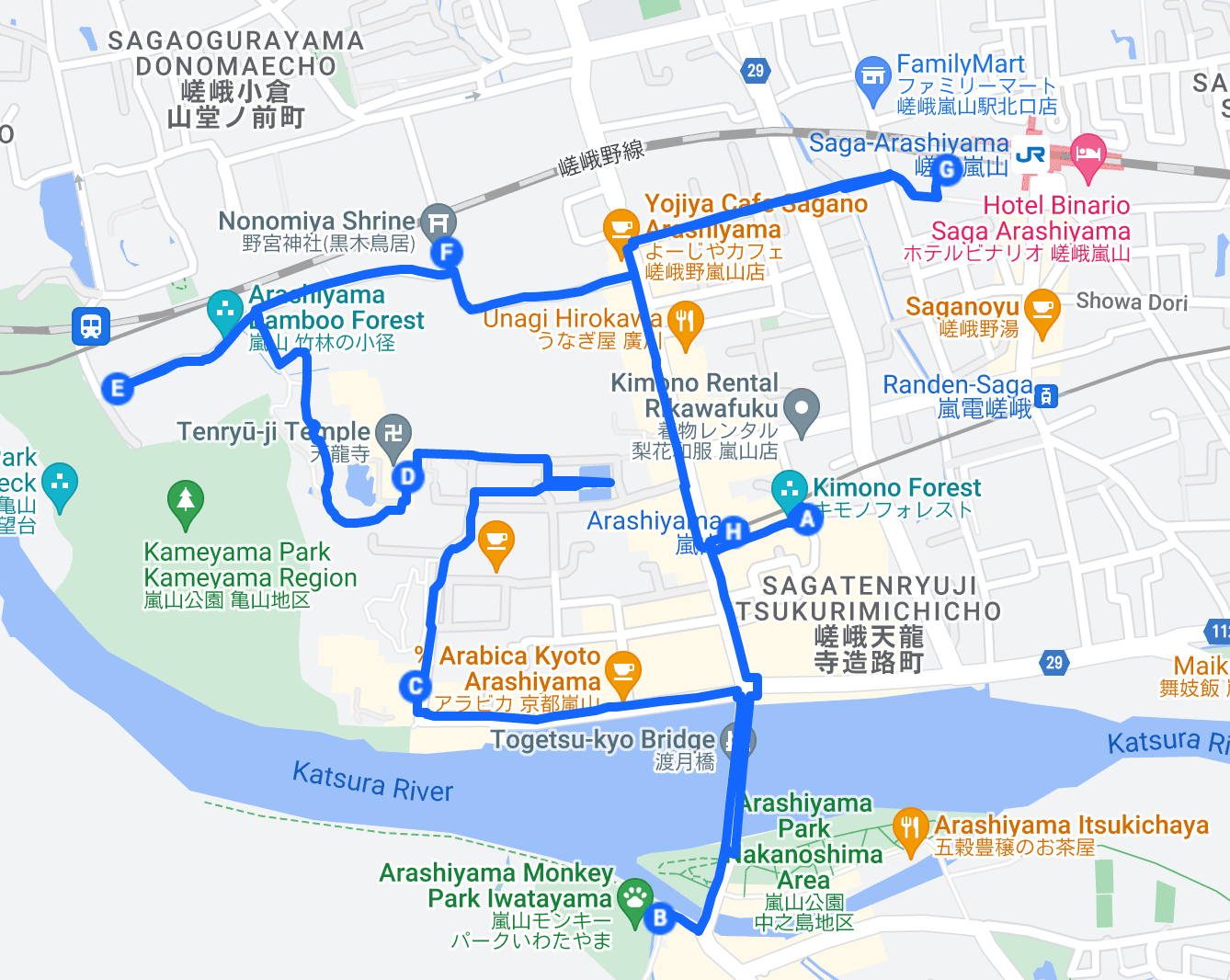
A. Kimono Forest

“The Kimono Forest” is an art spot located around Arashiyama Station, featuring fabrics of Kyo-Yuzen.
Kyo-Yuzen is a type of dyed textile produced in the Kyoto Prefecture region. It is know for its rich colors and patterns, often depicting animals and objects in an artistic manner.
While the vibrant Yuzen landscapes can be enjoyed during the day, the beauty of the Kimono Forest becomes even more pronounced at night.
There are approximately 600 poles wrapped in Kyo textiles spread around Arashiyama station. The idea for the “Kimono Forest” was conceived as part of the renovation of Arashiyama Station, aiming to enhance the nighttime ambiance.
This beautiful spot was crafted by a globally renowned interior designer. As a fusion of the traditional beauty of Kyo-Yuzen and modern art, it is beloved by many.
At the center of Kimono Forest is the “Dragon’s Atago Pond.” It is believed that immersing one’s hands in this pond brings happines.

Togetsukyo Bridge

The name Togetsu, meaning moon crossing, stems from a tale involving the Kamakura period (13C) Emperor Kameyama. During a boating party under a full moon, the emperor thought the moon looked like it was crossing the bridge.
Togetsukyo Bridge allows visitors to enjoy the beauty of cherry blossoms in spring and the vibrant autumn leaves in fall. The pleasant breeze during spring and autumn makes these seasons the best times to visit.
In the evenings of Spring and Fall, when the Togetsukyo Bridge is illuminated, the beautiful cherry blossoms and the autumn leaves appear magical.

B. Arashiyama Monkey Park Iwatayama

In the “Popular Japanese Tourist Spots for Foreigners 2014” by “TripAdvisor”, the Monkey Park was ranked 14th nationwide and is known as a must when going to Kyoto.
From the top of the Monkey Park, you can get a panoramic view of Kyoto city and the beautiful scenery of Arashiyama, especially during the autumn foliage season, which offers a breathtaking view.
Instead of animals being inside cages, it offers a unique experience where humans enter cages to interact with the animals.
It’s extremely popular among Western tourists, with 80% of the visitors on weekdays being from Western countries. Due to the ice age, monkeys in North America and Europe became extinct, so currently, wild monkeys can only be seen in zoos, making it a rare sight for them.
At 10:30, 12:30, and 14:30, it’s feeding time, and the staff scatter food. The monkeys rush towards it all at once. You shouldn’t miss this time!
Throughout Kyoto, you can see rickshaws. Originally, they were used as a traditional means of transportation in Japan.
Rickshaws often take routes that are different from the typical tourist paths, so there’s a chance you might enjoy hidden attractions and scenic views that have a unique charm.

C. Arashiyama Museum of Arts & Culture

D. Tenryū-ji Temple

The historic temple “Tenryu-ji” was founded in 1339 by Ashikaga Takauji to commemorate and mourn the passing of Emperor Go-Daigo.
It is a World Heritage site with numerous attractions, including the Sogenchi Garden and the Cloud Dragon painting.
During the Muromachi period, it was considered the most prestigious among Kyoto’s Zen temples and was ranked first among the “Kyoto Gozan” (Five Great Zen Temples of Kyoto).
The ceiling, measuring 10.6 meters in length and 12.6 meters in width, features a magnificent painting of a dragon with a diameter of 9 meters, showcasing its dynamic presence.

Discover Kyoto

At Tenryu-ji, there is a spiritual spring known as the “Spring of Love” that emerges from about 80 meters underground. It is believed that those who drink from this spring are blessed with love and happiness.
In front of the Peace Kannon, there are three frogs believed to protect the Kannon deity. It is said that if you throw a coin onto the plate in front of the frogs and it lands successfully, you will be blessed with happiness.
The inkstone, standing at a height of 2 meters, is said to have been used by the Japanese painter Suzuki Matsunen in 1899 when he painted the Cloud Dragon on the temple’s ceiling.

E. Bamboo Forest

In a space that feels out of the ordinary, the sunlight filtering through the branches of the towering bamboo sways, enveloped by the sound of the wind and rustling leaves.
In the bamboo forest’s walking path, one can take a stroll or participate in a rickshaw tour guided by an expert.

F. Nonomiya Shrine

The highlight is the “Kuroki Torii,” made without peeling the bark off the oak tree. It has a strict atmosphere, distinct from the vermilion torii gates.
A green garden lush with “carpet moss.” It represents the landscape of Arashiyama, with the white sand symbolizing the Katsura River and the small bridge above representing the Togetsukyo Bridge.
It’s a power spot that gathers faith as a deity for matchmaking and safe childbirth. In the inner precincts, there is also the “Shirofuku Inari Daimyojin,” believed to grant blessings for “childbirth and safe delivery.”
It is said that if you pray while stroking the turtle stone, your wishes will come true within a year. It is particularly famous for the benefit of “love fulfillment.”
It is one of the largest railway dioramas in Western Japan.
In the popular astronomical show, the constellations sparkling in the night sky are represented by 12,000 optical fibers, and the interior lighting of the trains running through the diorama creates a magical atmosphere.
A distinctive feature is the meticulously crafted models of Kyoto’s famous landmarks and temples. The turntable at Kyoto Station is also faithfully reproduced.
From the Togetsukyo Bridge to the JR railway crossing, spanning 600 meters, various establishments line the street, including dining places, cafes, dessert shops, and souvenir stores.
On holidays, the sidewalks are so crowded that they overflow with people.
It serves as the gateway to Arashiyama, a station filled with souvenir shops, pickle stores, and eateries. A unique feature is the availability of a foot bath, and during the summer, a beer garden is also held.