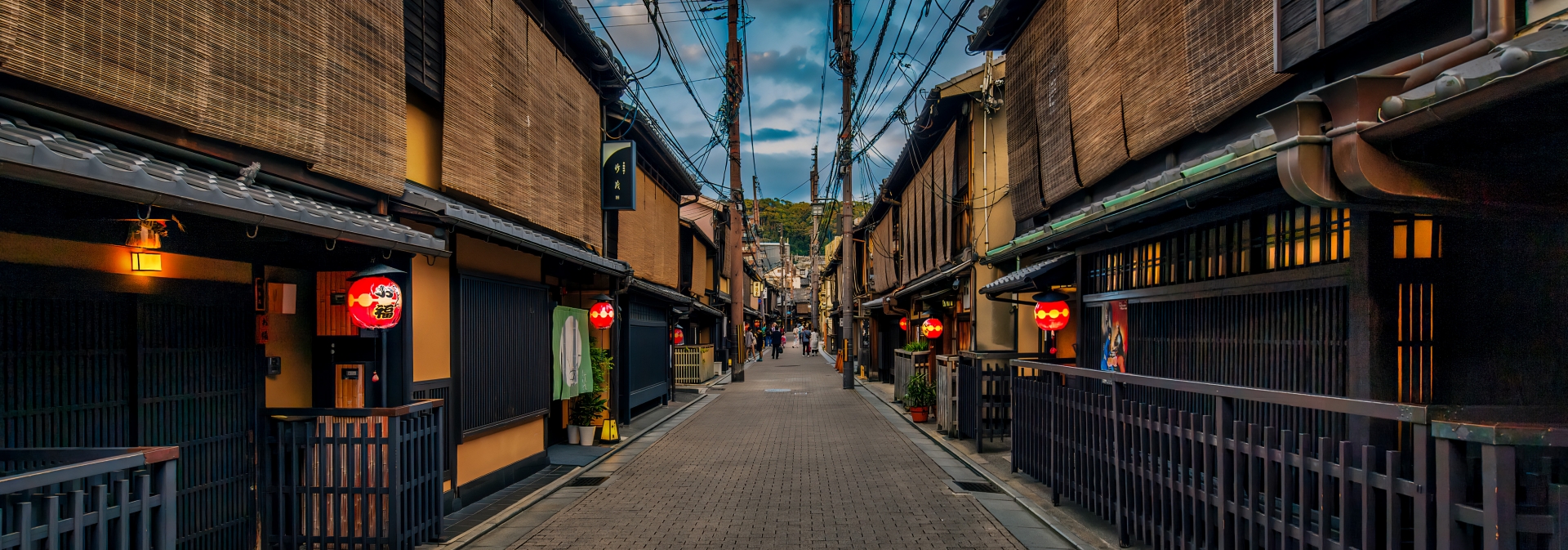
Gion
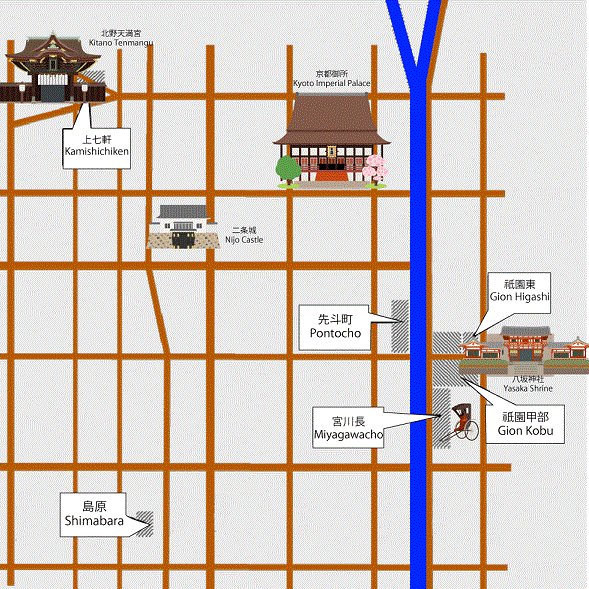
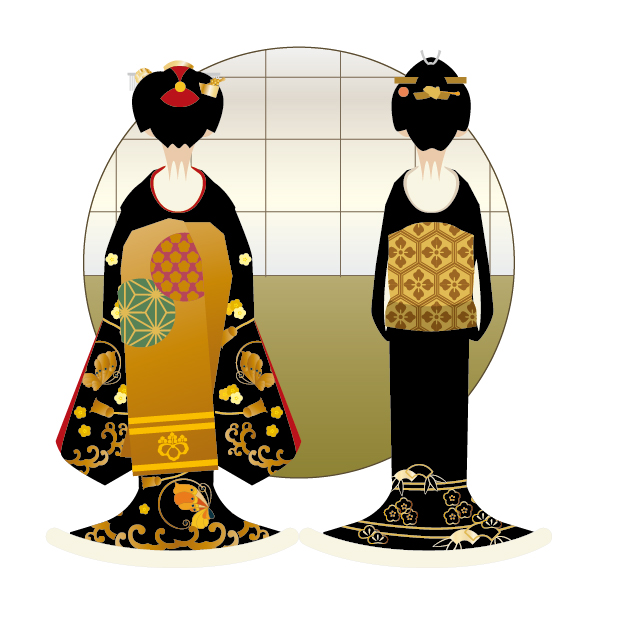
The center of Kyoto’s nighttime entertainment industry is Hanamachi Gion. Kyoto has five Hanamachis (Gion Kobu, Miyagawa-cho, Ponto-cho, Kamishichiken, Gion Higashi) and Shimabara. Gion Kobu started out as a tea house that offered refreshments to worshippers returning from Yasaka Shrine, a major shrine of the time. Over time, the tea house evolved into a place for entertainment. The area became dense with many such establishments, and became a “Hanamachi”. Hanamachi are districts Geisha and other entertainers dance and perform music and other arts. Hanamachi exist all throughout Japan. But Kyoto’s Hanamachi standout because they have “Maiko”. Maiko are women who are apprenticing to become Geisha. You can only see them in Kyoto. To become a Maiko, one must start rigorous training right after graduating from junior high school, at the age of 15. Kyoto is also the birthplace of Kabuki, now famous around the world. It was a very cosmopolitan city, with cutting-edge culture of its time. Try to imagine and feel the atmosphere of the Kyomachiya teahouse as we explore the history of Gion.
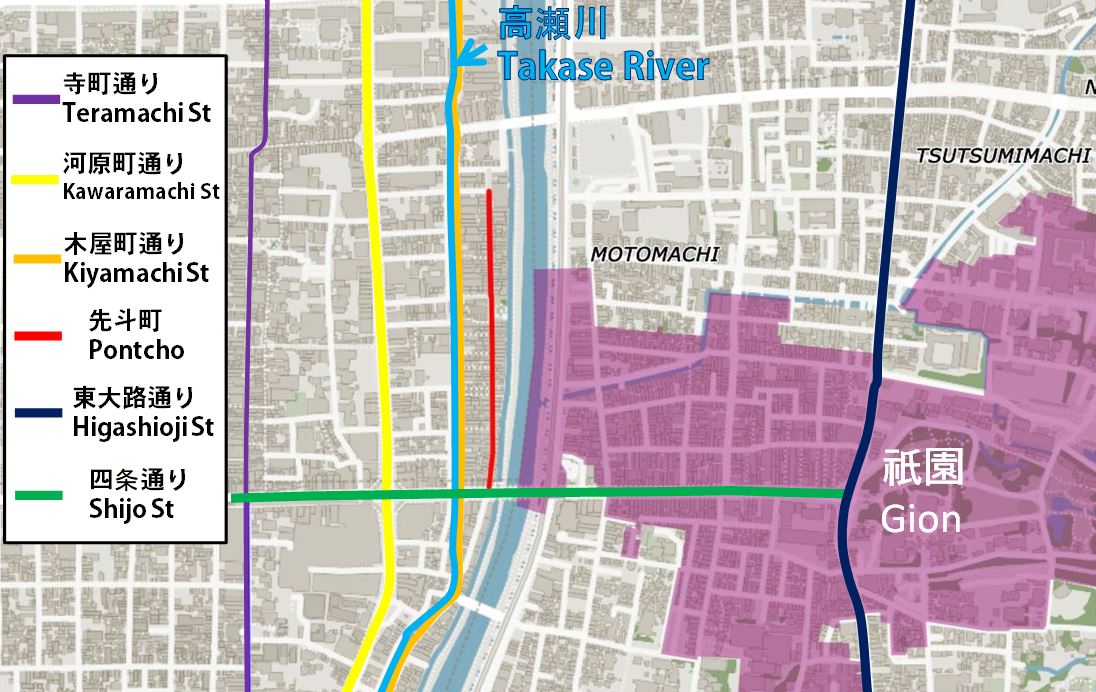
Gion originally developed as a town in front of Yasaka Shrine in the early Kamakura period in the early 13th century. In the Edo period (1603-1868), as the number of visitors to the shrine increased, teahouses began to line the streets. In 1670, the Kamo River was fortified and new land was created, which led to an explosion of brothels along and to the north of Shijo Street. By the end of the Edo period (1603-1868), 700 teahouses stood side by side with more than 3,000 Geisha and Maiko (apprentice Geisha), forming a large entertainment area, known as a “Hanamachi.” The increase in the number of teahouses led to the division of labor and the creation of the current Hanamachi system, in which the roles of teahouses, okiya, and restaurants are divided. Originally, most of the teahouses in Hanamachi were located on the north side of Shijo Street. The wave of modernization forced the Gion Hanamachi to relocate.
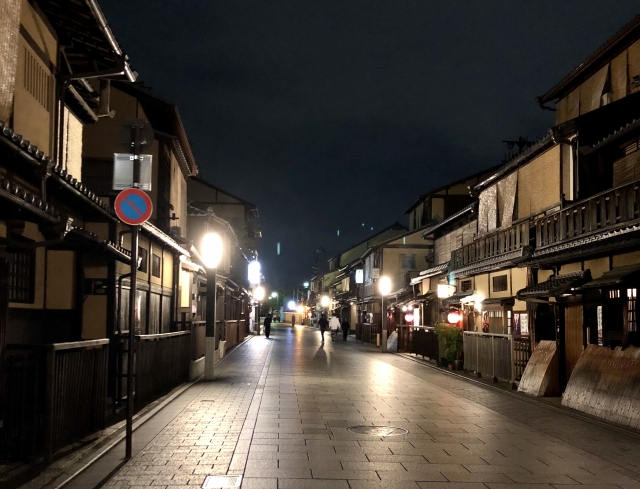
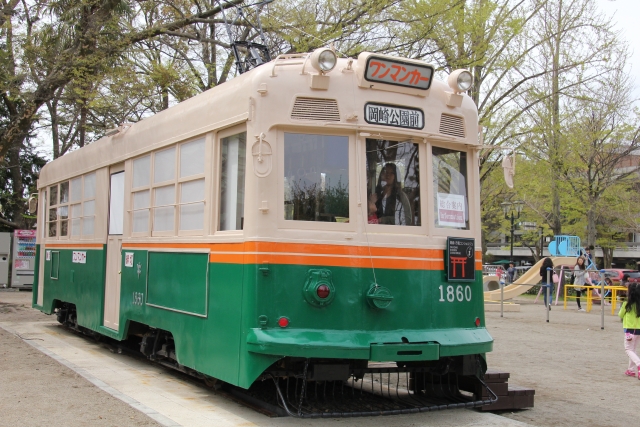
1868 saw the transfer of power from the Edo Shogunate to the Meiji government, a more modern administration. The Meiji government established a policy of promoting the development of new urban areas according to population growth. As Japan grew as a modernized nation, the Meiji government brought electricity across Kyoto in 1912. Higashijo Dori and Shijo Dori were greatly widened and trams tracks were laid. It is true! Trams were running on Higashijo Dori and Shijo Dori in front of Yasaka Shrine over 100 years ago. With the installation of the trams system, Hanamachi was forced to reorganize and relocate.
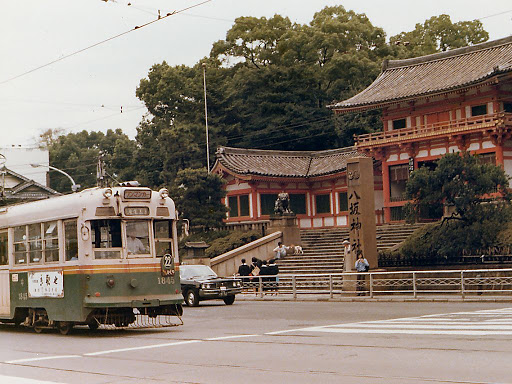
Hanamachi is simply an area of town with a high density of tea houses. Of course, there are many entertainment industries such as Maiko and Geisha, but prostitutes that provided sexual services were also present. It was also the place of yuyaku, or brothels. As urban development progressed and the laying of tram networks expanded the city, many citizens were able to travel to Shijo Dori, and it was thought that exposing so many citizens to the various activities of Hanamachi was not good for the morals. So, the Meiji government set out to relocate Hanamachi to outside of city limits. They prohibited the operation of tea houses along Shijo Dori. The tea houses had no option but to relocate. An area to the south of Shijo Dori was chosen as the new location. The area was marshy and thick with bamboo, and was the location of the Kenninji Temple until the Edo Period. Kinnenji was a vast temple, stretching from present day Minamiza all of the way to the Yasaka Shrine area. Of course, buildings cannot be built on marshes. The marsh was filled in with ground raising work, and the tea house district finally relocated. Even today, houses on the east side of Shodeneigenin are a few steps above their surroundings due to the ground raising work carried out centuries ago.